Shared Cupboard Labels That Clarify Who Can Use What
Shared cupboard labels can clarify who may use supplies and where they belong. Choose wording that makes the boundary clear without turning shelves into rules.
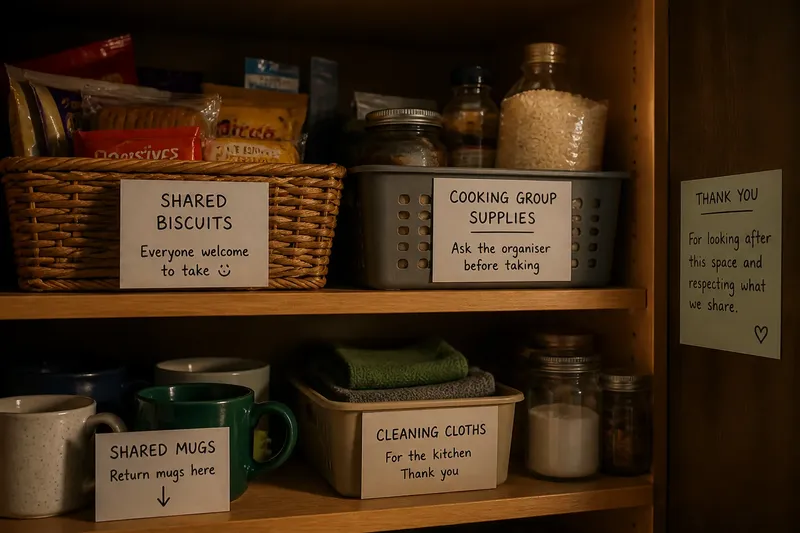
Shared cupboard labels work best when they explain a real boundary: who may use an item, where it belongs, or what to do before taking it. A label can make an agreement visible, but it cannot create agreement by itself. Start with the uncertainty people actually encounter, not a desire to name every object.
Start with access
Notice where people pause, ask permission or leave an item untouched. Those moments reveal whether the cupboard needs a label about location, ownership or access. These are different questions, even when they concern the same shelf.
“Tea” may identify a category. “Tea for everyone” says who may take it. “Ask before taking” sets a limit. Use the wording that matches the arrangement people have agreed to, rather than making a preference look official with a strip of tape.
Imagine a community kitchen with a basket of donated biscuits beside a box of ingredients reserved for a cooking group. New visitors cannot tell which supplies are shared. The group agrees that the biscuits are available to everyone and the ingredients are reserved; two cards reading “Shared biscuits” and “Cooking group supplies — ask the organiser” make the distinction visible. The expected result is that visitors can take the biscuits while checking before using the reserved ingredients.
Name the boundary
Choose words that describe the next action clearly. “Shared mugs” distinguishes communal cups from personal ones. “Return mugs here” adds an instruction and should appear only if people have agreed that this is where they belong.
Keep categories broad enough to remain accurate as contents change. “Spare containers” is more durable than a label naming particular containers that may be borrowed or replaced. Avoid quantities unless the number itself matters and someone will keep it current.
Use plain language, not an internal nickname or unexplained abbreviation. If a label concerns permission, say who can answer a question when that is known and practical. A confident-sounding label is still a poor guide if nobody knows whose permission it describes.
Agree before instructing
Descriptions and rules do different work. “Cleaning cloths” names a category. “Only the caretaker may use these” limits access. Discuss wording that affects shared supplies, personal belongings or responsibility for replacing items with the people who use the cupboard.
If there is no agreement, choose a neutral description or leave the disputed boundary unlabeled while people discuss it. Never label another person’s belongings as communal without their consent. A shared cupboard does not make every object in it public property.
Choose a readable label
Use removable paper, reusable cards or masking tape for wording that may change. A wipe-clean label may suit a container handled with damp hands. Put the words where they answer the question before someone has to move other things.
Use readable lettering and words as well as colour. A colour-only system can leave people guessing, while a label that covers product information can create a different problem. For food, medicines, hazardous products or other items with safety implications, retain the original product information and follow the relevant instructions and local rules.
Check the access rule?
Should every container say who owns it?
No. Add an ownership label when uncertainty could affect whether someone may use or move an item. If ownership is obvious and uncontested, extra wording may add clutter without helping anyone decide.
What should a label say when permission is needed?
State the boundary in ordinary words, such as “Ask before taking”, and name whom to ask if that person is identifiable. If nobody can answer reliably, clarify the arrangement before posting an instruction.
What if people still ask?
Check whether the label answers the question they are asking, rather than the one its writer expected. If it names a category but not access, revise it to state who may use the item or whom to consult.
When should an access label come down?
Remove it when the agreement changes, the item is no longer reserved, or the named contact is no longer responsible. An outdated restriction can discourage people from using supplies that are now shared.
Review the wording
Use this short review before fixing an access label in place. Each check should lead to a practical decision:
- Check whether the item is genuinely shared; if everyone may use it, label it “Shared” or leave it unlabeled if access is already clear, but do not mark it as reserved.
- Check whether anyone has agreed to reserve the item; if yes, name the group or purpose, but if not, describe the item neutrally and discuss access before restricting it.
- Check whether permission is required; if yes, state whom to ask when known, but if no one can answer, clarify the arrangement rather than posting a vague warning.
- Check whether a personal item is mixed with communal supplies; if its owner agrees, mark the distinction, but if they do not, move or discuss the item without relabelling it as shared.
- Check whether the wording gives a clear next action; if it does, keep it brief, but if readers still need an explanation, rewrite it in plain language.
- Check whether the agreement and named contact are still current; if both remain valid, keep the label, but if either has changed, remove or replace it before the old instruction misleads someone.
After placing the label, notice whether people can make the intended decision without asking someone to interpret it. If they hesitate, check whether the access rule is agreed and whether the words state it directly. Revise the label or the underlying arrangement; adding more text is not automatically an improvement.
Shared cupboard labels are useful when they make permission and ownership easier to understand. The clearest version may be only a few words, but those words should describe a real agreement and remain open to revision when that agreement changes.