Before an Open-House Gathering, Make the First Choice Obvious
An open-house gathering feels easier to join when the first choice is obvious. Set a simple invitation, a clear activity and a graceful way to pause.
At an open-house gathering, a guest who has just stepped inside should be able to see one reasonable thing to do. The first choice need not be grand: add a name to a card, put a mug on the table, or join a small activity already under way. Making that choice visible helps people participate without requiring them to interrupt a conversation to ask how.
This is a preparation guide, not a plan for directing every minute. The aim is to offer a few clear invitations, then leave room for guests to decide how much to join. Before people arrive, work through these choices in order.
1. Name the first action
Choose one action a guest can take on arrival. Write it as a plain instruction, such as “Add a note to the neighbourhood map” or “Choose a place for your cup”. A task that starts with a verb is easier to act on than a broad invitation to “get involved”, which leaves the guest to work out what involvement might mean.
Keep the first action small and self-contained. A guest should not need to learn a set of rules, wait for a host to finish a conversation, or commit to staying for the whole gathering. If the action requires several explanations, simplify it or move it later in the event.
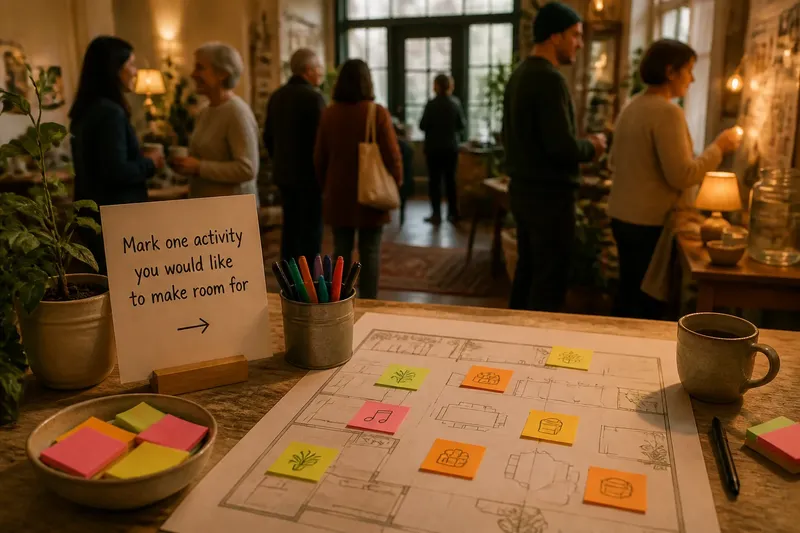
Imagine you are hosting an afternoon at a shared community room and want people to contribute ideas for its next use. Place a large paper floor plan and a cup of coloured sticky notes on a table, with the instruction “Mark one activity you would like to make room for”. A guest can add an idea, read what others have written, or pass. The expected observable result is a growing set of visible suggestions, rather than a queue of people asking where to begin.
2. Put the invitation in view
Set the activity where a newly arrived guest can notice it without having to search the room. That does not mean it must sit at the entrance or obstruct anyone’s arrival. It means the invitation should be visible from a place where people naturally pause, and the materials should make clear what belongs together.
Use a sheet of paper, a marker and a container for spare materials if those are enough. Keep the instruction close to the activity, not on a distant noticeboard. A simple layout can show the next action at a glance: blank cards beside a pencil, a bowl beside a sign asking for recipe suggestions, or a map beside notes and removable dots.
Check the activity from the viewpoint of someone who has not heard the host explain it. Can they identify the materials, understand the instruction and see where a finished contribution goes? If not, change the arrangement before adding more words. Extra explanation is rarely improved by placing it in a smaller font.
3. Make participation optional
An invitation should not feel like a test of sociability. Some guests will want to contribute straight away; others may prefer to look around, speak with someone they know or settle in quietly. Make it clear through the wording and the arrangement that participation is welcome, not compulsory.
Use language that leaves a genuine choice. “Add an idea if you like” is different from “Everyone must add an idea before joining us”. Avoid asking each arrival to introduce themselves or explain why they came unless that is essential to the gathering. Public self-disclosure can turn a simple welcome into a small performance.
Offer more than one comfortable way to take part when the activity allows it. A person might write a suggestion, point to an option, listen to a conversation, or ask a host a question. Do not treat quiet observation as a failure to join. It may be the way someone decides whether this is a place where they want to participate.
4. Give newcomers a human option
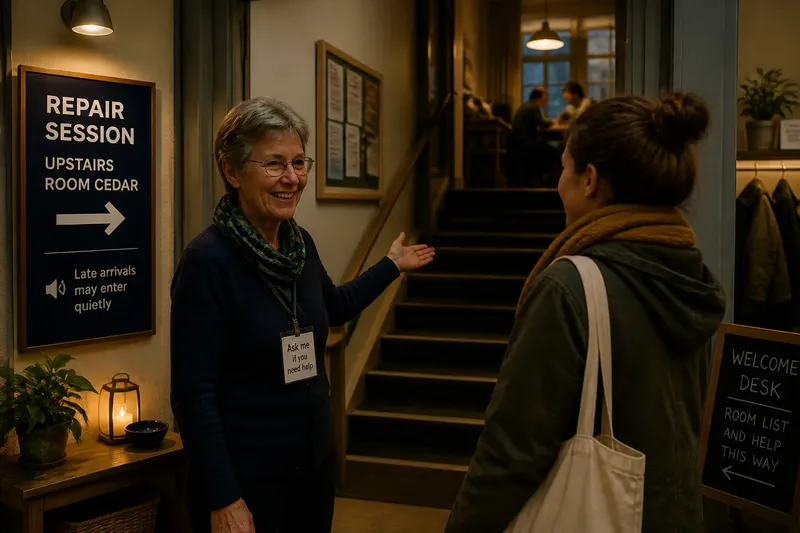
A visible activity helps, but it cannot answer every question. Arrange for a host or volunteer to be available for a short, low-pressure welcome. Their role is to say what is happening, indicate the first activity and make it easy to ask for help, not to escort each guest through a compulsory tour.
Agree on a simple opening line before the event. For example: “Hello, we’re collecting ideas for the room. You can add a note here, or just have a look around.” This gives the guest useful information and an easy way to decline. Hosts can then turn their attention elsewhere rather than hovering beside the activity.
If several people are hosting, decide who will notice arrivals and who will keep the activity supplied. This prevents a common muddle in which every host assumes another person is welcoming guests, while everyone becomes very interested in arranging the same stack of paper. Share the roles briefly before opening the doors.
5. Lower the cost of joining
Consider what a guest must do, know or bring before the first action feels possible. Provide the basic materials at the activity. Use ordinary language instead of specialist terms. If a contribution can be made without writing, offer a way to point, place a token or speak to a host who can write it down.
Keep the first request modest in time and effort. Asking someone to make a quick choice is different from asking them to take responsibility for a new project on arrival. If the gathering is meant to build support for a future activity, separate collecting initial interest from asking people to volunteer. A guest should be able to respond to one without being treated as having agreed to the other.
Think about the range of ways guests may want to take part. A person arriving with a child may have little attention to spare. Someone who is new to the group may not recognise familiar names or local shorthand. A short instruction and an activity that works without background knowledge make participation less dependent on insider status.
6. Prepare for a pause
Gatherings rarely proceed in a smooth line from arrival to activity. Guests may arrive in a cluster, the host may be occupied, or the first contribution may take a while. Decide what a person can do while waiting without inventing another formal task.
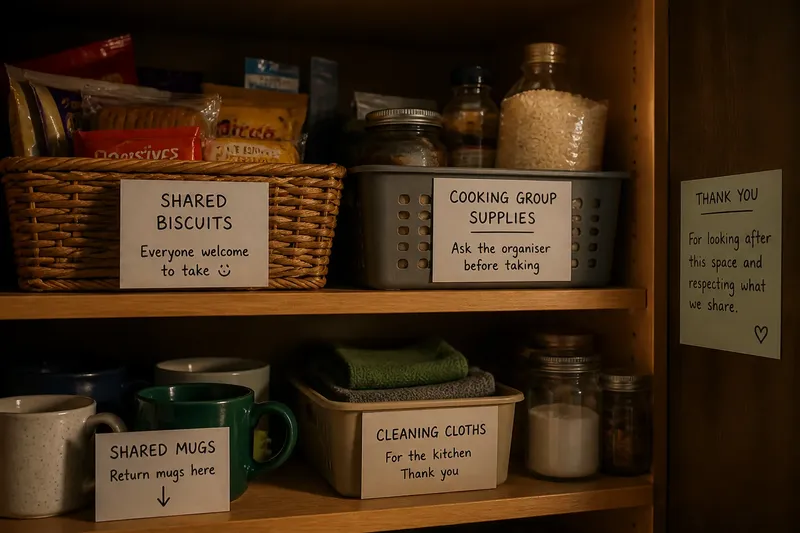
For a map activity, that might mean leaving a few completed notes visible so newcomers can see the idea. For a shared table, it could mean putting the cups and water together with a simple invitation to help themselves. A useful pause gives someone time to look, choose or wait without standing in the middle of a group that already appears to know what is happening.
Check that the activity does not depend on an immediate response from another guest. If the first person must explain it to the next, the arrangement is asking participants to become unpaid hosts. A self-explanatory prompt and visible example of a completed contribution can make the activity easier to approach independently.
7. Leave room to stop
Decide what happens when someone finishes the first action. They may want to talk, look at other contributions, join a second activity or simply take a seat. Make those options legible without presenting a menu of duties.
For example, place the map activity near a table where people can sit and talk, but do not make adding a note the price of a chair. A host can mention another activity if a guest seems interested. The distinction matters: a gentle offer supports choice, while a sequence of prompts can make an open house feel like a course with attendance requirements.
Also decide how to handle a guest who wants to leave after a short visit. A warm goodbye is enough. Do not ask them to justify their departure or promise to return. An open-house gathering works best when entering and leaving both feel ordinary.
8. Check the invitation together
Before guests arrive, ask another host to approach the activity as if they had never seen it. Without a spoken explanation, can they tell what the first action is, where to put the result and what happens if they choose not to participate? This brief check is about clarity, not judging whether the activity is clever.
Make a small final review:
- Instruction: Is there one clear first action? If not, replace the wording with a direct verb and a specific object.
- Materials: Are the necessary items together and ready? If something is missing, simplify the activity rather than asking guests to fetch supplies.
- Choice: Can a guest observe or decline without explanation? If not, change the invitation so participation is plainly optional.
- Support: Does someone know how to welcome arrivals and answer questions? If not, agree on who will take that role.
- Next move: Can someone finish and move on comfortably? If not, identify a natural place to sit, talk or continue looking around.
Use the review to make one or two practical adjustments, not to turn the gathering into a rehearsal. The purpose is to remove needless guessing, not to script the guests.
Questions hosts ask?
What is a good first activity for an open house?
Choose something connected to the gathering that can be understood and completed on its own, such as adding a suggestion to a shared map. Keep it brief, make the materials obvious and let guests take part without having to speak to the whole group.
How do I welcome guests who arrive alone?
Offer a greeting, explain the visible first action and mention that looking around is also fine. A simple invitation gives someone a way into the event without requiring a formal introduction or a host to stay beside them.
Should everyone take part in the opening activity?
No. An open-house activity can give guests an easy route into the gathering, but it should not be a condition of being welcome. Some people will prefer to observe, talk or arrive at a later point of participation.
What if nobody starts the activity?
A host can make one contribution and then step away, making the action easier to understand without turning it into a demonstration that demands applause. If interest remains low, let the activity sit; people may be more ready to join after they have settled in.
Keep the choice visible
For an open-house gathering, the first choice is a small piece of hospitality: it tells a guest that there is a place for them without deciding how they must use it. Put the invitation where it can be understood, give people a person to ask and leave a respectable option to pass. Once guests can begin on their own terms, the hosts can spend less time directing traffic and more time taking part themselves.